
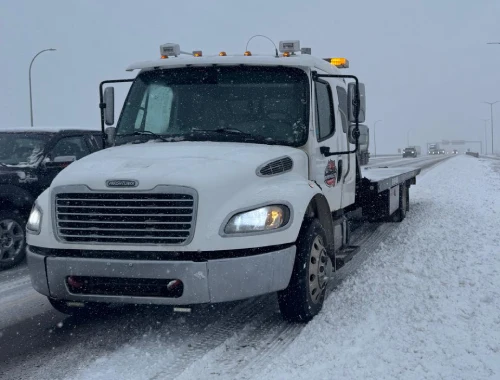
Alberta Winter Road Preparation
Alberta Winter Road Preparation
Winter driving in Alberta can change from routine to risky faster than most drivers expect. Clear pavement, light snow, freezing rain, blowing wind, and icy shoulders can all show up on the same trip, especially when travelling between Calgary, Strathmore, Langdon, Chestermere, Okotoks, and nearby rural roads.
Good Alberta winter road preparation is not only about having winter tires or a snow brush. It is about understanding how cold weather affects your vehicle, your timing, your safety, and the choices you make when something goes wrong.
Why Alberta Winter Roads Need Extra Attention
Alberta winters are hard on vehicles. Cold temperatures can weaken batteries, reduce tire pressure, thicken fluids, freeze locks, and make small vehicle issues more serious. A car that starts easily in mild weather may struggle after one cold night. A tire that looked fine in the driveway may lose pressure once temperatures drop.
Road conditions also change quickly. A road can be dry in town and icy just outside city limits. Highway shoulders may be covered in snow. Rural approaches, acreages, industrial yards, job sites, and gravel roads can become soft, slippery, or hard to see.
This is why winter preparation should start before the problem happens. Drivers who plan ahead usually make safer decisions when they face delays, poor visibility, or a vehicle issue.
Check Your Battery Before Cold Weather Peaks
Battery problems are one of the most common winter vehicle concerns. Cold weather reduces battery strength, while engines need more power to start. This creates the perfect situation for a no-start morning.
Before winter gets severe, have your battery tested if it is older, weak, or slow to start. Watch for warning signs such as dim lights, clicking sounds, slow cranking, or electrical issues. These signs can become worse after a cold night.
It also helps to keep booster cables or a portable battery pack in your vehicle. Even if you do not use them yourself, having them available can make the situation easier when help arrives.
Keep Fuel Levels Higher Than Usual
In winter, running close to empty is not worth the risk. A higher fuel level gives you more room to handle delays, road closures, traffic backups, and unexpected waiting time.
Cold weather can also make a breakdown more uncomfortable. If you are stuck safely off the road and your vehicle can run without danger, fuel may help you keep warm while you wait. Keeping at least half a tank during winter travel is a simple habit that can reduce stress.
For longer drives outside Calgary or between nearby communities, check fuel before leaving. Some routes have fewer nearby options, and bad weather can make a short delay feel much longer.
Prepare A Winter Safety Kit
A winter safety kit does not need to be complicated. It should include practical items that help you stay visible, warm, and reachable.
Useful items include gloves, a blanket, flashlight, phone charger, snow brush, ice scraper, small shovel, warning triangles or reflective markers, water, and simple snacks. Extra windshield washer fluid rated for winter is also important because road spray can reduce visibility quickly.
Drivers who travel rural roads, job sites, or highways should be even more prepared. These areas may have less lighting, fewer nearby buildings, and longer response times during bad weather.
Watch Tire Condition And Pressure
Tires are your main contact with the road. In winter, that contact matters even more. Low tread, wrong tire type, or incorrect tire pressure can affect braking, steering, and control.
Cold weather can lower tire pressure. A tire that was properly inflated in fall may be underinflated during winter. Check tire pressure often, especially after major temperature drops.
Winter tires can improve grip in cold conditions, but they still have limits. Ice, packed snow, slush, and black ice can still cause loss of control. Good tires help, but careful driving and realistic speed choices still matter.
Plan For More Time On Every Trip
One of the easiest winter mistakes is leaving at the same time you would in summer. Alberta winter driving often needs extra time. You may need time to clear snow, defrost windows, drive slower, stop for fuel, or take a safer route.
Rushing increases risk. It can lead to hard braking, poor lane changes, and unsafe decisions around trucks, snowplows, or stopped vehicles.
If you are driving between Strathmore, Calgary, Langdon, Chestermere, Okotoks, or nearby highways, check conditions before leaving. Give yourself enough time so you do not feel pressured to drive faster than the road allows.
Know When To Pull Over Safely
Sometimes the safest decision is to stop driving. If visibility drops, the road becomes too icy, or your vehicle starts acting differently, it may be better to pull over in a safe place.
Choose a parking lot, gas station, wide shoulder, or safe side road when possible. Avoid stopping in a travel lane or blind spot. Turn on hazard lights and stay aware of traffic.
If your vehicle is stuck or disabled, do not stand near fast-moving traffic. On highways, the safest place may not always be inside the vehicle, but leaving the vehicle can also be dangerous depending on traffic, weather, and location. Use judgment and call for help if you are unsure.
Understand Rural And Highway Challenges
Winter problems are often more difficult outside busy city areas. Rural roads may have drifting snow, soft shoulders, hidden ditches, and fewer landmarks. A dropped pin can be very helpful when explaining your location.
Highways create another challenge. Traffic moves quickly, shoulders may be narrow, and visibility can change with blowing snow. A vehicle stopped on the side of a highway needs careful handling because safety is not only about the vehicle. It is also about the driver, passengers, passing traffic, and the person coming to help.
This is why clear communication matters. When calling for help, explain the exact location, direction of travel, nearby exits, road signs, and whether the vehicle is in a safe spot.
Share The Right Details When Calling For Help
When winter conditions are involved, the details you provide can make a real difference. Be ready to explain what happened, where the vehicle is, whether it is stuck in snow or mud, whether there is damage, whether the wheels can move, and whether the keys are with the vehicle.
If you are in a ditch, on a slippery hill, in a snowbank, or at a job site, say that clearly. A simple vehicle issue and a recovery situation may need different planning. Accurate information helps the company send the right truck, give a better estimate, and explain what may affect the job.
Better Planning Leads To Safer Decisions
Winter roads are not always predictable, but your preparation can be. A charged phone, good tires, enough fuel, a safety kit, and a realistic plan can make a stressful situation easier to manage.
The goal is not to fear winter driving. The goal is to respect it. Alberta drivers deal with snow, ice, wind, and cold every year. A little planning helps you stay safer and make better decisions when conditions change.
Tow Pros Towing & Recovery LTD supports drivers with practical help, clear communication, and honest arrival updates. The team serves Calgary, Strathmore, Langdon, Chestermere, Okotoks, and nearby areas, with service available 5am–9pm daily, after-hours by availability.
For winter vehicle concerns, roadside issues, or a situation that needs careful handling, call Tow Pros Towing & Recovery LTD at +1 (403) 361-5432 for helpful guidance, honest pricing, and a fast response with an honest ETA.